




Nothing tests a system’s timing like the middle of a heat wave or the first cold snap of the season. Your AC or furnace picks that exact moment to act up, and suddenly you’re stuck with a decision: pay for another repair, or bite the bullet and replace the whole thing?
Although there’s no one-size-fits-all answer, there are a handful of factors that, taken together, make the decision between repair and HVAC installation in Cedar City a lot clearer.
What to Take into Account When Making Your Decision
Start With the Age of Your System
Age is usually the first thing worth considering. Most air conditioners and furnaces are built to last somewhere in the 15- to 20-year range with regular maintenance. If your system falls within that window, even a repair that feels like a hassle is probably worth making.
But if your system is nearing or past that mark, the calculation changes. A repair might fix the immediate problem, but an older system is more likely to have another issue waiting in the wings.
That doesn’t mean every older unit needs to be replaced immediately; it just means age should factor into the decision alongside everything else.
The 50% Rule: Weigh Repair Cost Against Replacement Cost
A helpful guideline in the industry is what’s often called the 50% rule: if a repair is going to cost 50% or more of what a brand-new system would cost, replacement is usually the better financial move.
This rule works best when you factor in age, too. A repair on a 5-year-old system that comes in at 40% of replacement cost is an easy call: fix it. That same repair cost on a 17-year-old system tells a different story, especially if there’s a good chance something else will need attention soon after.
Luckily, you don’t have to run these numbers yourself. A technician can walk you through both a repair quote and a replacement estimate side by side, so you’re making the decision with real numbers instead of a guess.
How Often Is It Breaking Down?
One repair isn’t necessarily a red flag. Systems have occasional issues, and a single fix doesn’t mean anything is fundamentally wrong. What matters more is the pattern.
If you’ve called for repairs more than once or twice in the past year or two, or if the same part keeps failing, that’s a sign the system is on a downward slope rather than dealing with an isolated problem.
Small repairs can feel manageable one at a time, but they add up. At a certain point, the total cost of patching an aging system starts to rival, or exceed, the cost of simply investing in a new one that won’t need constant attention.
Energy Bills and Efficiency
Every HVAC system loses some efficiency as it ages, and that loss tends to accelerate once a system is past its expected lifespan.
If your energy bills have been creeping up without any real change in how you’re using your heating or cooling, that’s often a sign your system is working harder than it used to just to keep your home comfortable.
Newer systems are built to much higher efficiency standards than they were even a decade ago, so replacing an aging unit can lead to real monthly savings that offset the upfront cost over time.
It’s also worth asking about any current tax credits or rebates for high-efficiency systems. Those incentives can make replacement a more attractive option than it first appears.
Comfort and Performance Issues
Sometimes the clearest sign isn’t a breakdown at all, but how your home feels day to day. Rooms that never reach the right temperature, a system that runs constantly without keeping up, more dust than usual, or humidity that feels off can all point to a system that’s losing capacity or wasn’t sized correctly to begin with.
That said, comfort issues aren’t always about the unit itself. Sometimes ductwork, insulation, or sizing is the real culprit, and no new system will fully solve the problem until that’s addressed too.
A professional inspection can help pinpoint whether you’re dealing with an aging system or something else entirely.
When Repair Still Makes Sense
All of this said, replacement isn’t always the answer, and it shouldn’t be treated like the default. Plenty of repairs are quick, affordable, and get your system running like nothing ever happened.
Repair is usually the smarter, more cost-effective choice when:
- The system is relatively young. If your AC or furnace is well under that 15- to 20-year mark, a repair now is a normal part of ownership, not a sign of bigger problems ahead.
- The repair itself is minor or inexpensive. A failed capacitor, a worn-out fan motor, or a simple sensor issue is a world apart from a cracked heat exchanger or a failing compressor. Not every fix is a major investment.
- The system has a solid maintenance history. Units that have been serviced regularly tend to run more reliably and hold up better over time, which makes a one-off repair a safe bet rather than a gamble.
- This is an isolated issue, not a pattern. If this is the first call you’ve made in years, it’s reasonable to treat it as exactly that — an isolated fix, not evidence the system is failing.
- The repair fully resolves the problem. If a technician can confirm the fix addresses the root cause (and not just a symptom that’s likely to resurface), that’s a good sign the system has more life left in it.
A technician you trust should be upfront with you either way. If a repair is the right call, that’s what you should hear, not a sales pitch toward something you don’t need yet.
Make the Call Today – Trust Us for Repairs and HVAC Installation in Cedar City
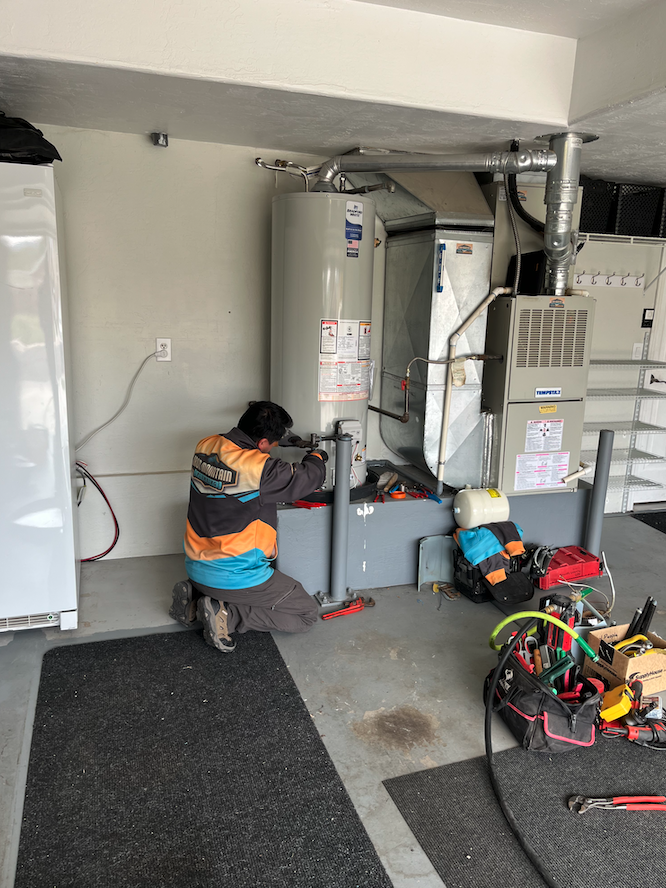
If your HVAC system has been giving you trouble, or you’re just not sure whether it’s time to repair or replace, we’re happy to take a look. At Iron Mountain Plumbing and Air, we’ll give you an honest assessment and straightforward, upfront pricing so you can make the decision that’s right for your home and your budget.
Contact us today! We’re available 24/7 and typically on-site within two hours.